
Discover the materials of tomorrow, today
Know how a material will behave before you ever make it. Promethium resolves the electronic structure, interaction energies, and conformational behavior that govern real-world performance across polymers, catalysts, organic electronics, and formulations, so you can rank candidates on first-principles evidence and take only the most promising ones into the lab.
The Platform
Quantum-accurate property prediction for real-world systems
Predict electronic, structural, and energetic properties with quantum-level accuracy, so you can screen candidate materials computationally and advance the highest-potential candidates to experimental validation.
Run the same first-principles methods across polymers, catalysts, organic electronics, and formulations, on systems large enough to reflect the real material.
.svg)

Key Workflows
Computational chemistry workflows built for materials discovery
Interaction energy decomposition
Determine the physical origin of noncovalent interactions using functional-group symmetry-adapted perturbation theory (F-SAPT).

Chemical reaction prediction
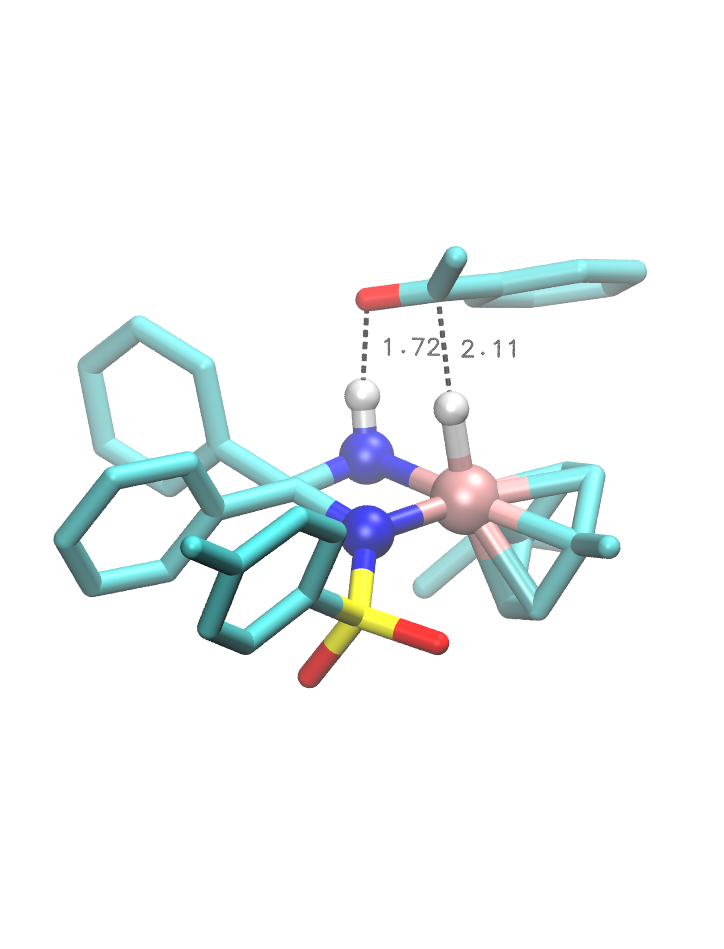
Predict the activation energy, transition state, and enthalpy for a reaction using the reactant and product structures.
Molecule characterization
By analyzing the patterns and energies of a molecules transitions between ground states and excited states, you can gain insight into the molecular structure, electronic configuration, and optical properties of a molecule.

Our industries
Quantum chemistry simulation across industries
Electronics
- Organic Electronics
- Semiconductors
Automotive
- Catalysts
Aerospace
- Polymers
- Metals, Alloys, Ceramics
Energy
- Energy Storage
- Catalysts
Medical Devices
- Polymers
Construction
- Polymers
- Metals, Alloys, Ceramics
Consumer Packaged Goods
- Polymers
- Formulations
Environmental
- Water treatment
- Waste management
- Air purification
Predict Material Properties Before You Synthesize
Materials science teams use Promethium to screen candidates computationally, reducing synthesis cycles and accelerating discovery.